Posted by
Unknown
on 03:40 · 0
comments
Incredible colorful Striped Icebergs
Icebergs themselves are amazing natural creations.Icebergs are formed when large blocks of ice breaks off from glaciers
ice shelf and is floating in open water. Because glaciers are built up
from snow falling on the Antarctic continent over millennia, this ice
consists of pure fresh water. This floating chunk of freshwater ice then
interacts with seawater beneath them it.
Posted by
Unknown
on 06:04 · 0
comments
Angel
(also known as Salto Angel) is the highest waterfall n the world. It is
located in Venezuela and is 979 m (3212 ft.) high. It is also declared
as UNESCO World heritage site.
Posted by
Unknown
on 05:18 · 0
comments
Baikal
lake in Siberia is World's deepest and clearest lake. It has average
depth of 744.4 meters.It contains about world's 20% unfrozen surface
fresh water.
Posted by
Unknown
on 05:02 · 0
comments
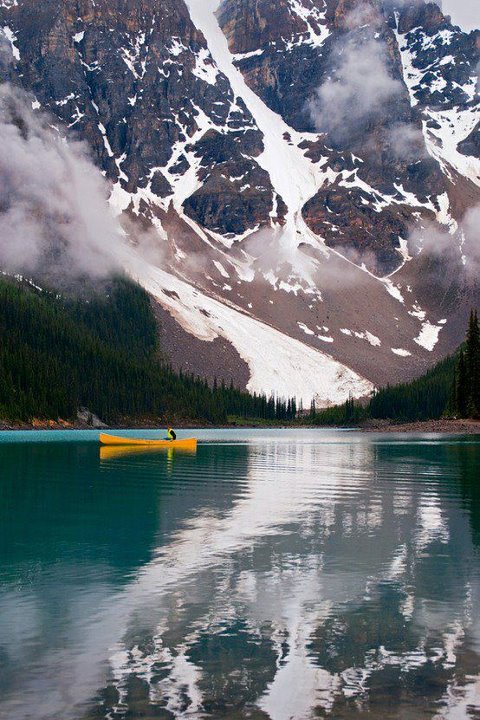
~peace in nature~
Moraine Lake, Alberta, Canada
Moraine Lake is a definite must-see for anyone traveling in the Lake Louise
vicinity. The lake shore is only 12.5 km/7.5 mi away from Lake Louise,
and offers a chance to see one of the largest peaks in the Canadian
Rockies, a beautiful glacial lake, a huge glacier, and one of the best
places to view grizzly bears in Banff National Park.
Posted by
Unknown
on 23:40 · 0
comments
Italian Ghost Town: Craco, Italy
Craco is located in the Region of Basilicata and the Province of Matera.
About 25 miles inland from the Gulf of Taranto at the instep of the
“boot” of Italy.The medieval village of Craco is typical of the hill towns of the region
with mildly undulating shapes and the lands surrounding it sown with
wheat. Around 540AD the area was called “Montedoro” and inhabited by
Greeks who moved inland from the coastal town of Metaponto. Tombs have
been found dating from the 8th century suggesting the original
settlement dates back to then. Today, earthquakes, landslides, and a
lack of fertile farming land have contributed to the abandonment of
Craco.
In 1891, the population of Craco stood at well over 2,000 people. Though
there had been many problems, with poor agricultural conditions
creating desperate times. Between 1892 and 1922 over 1,300 people moved
from the town to North America. Poor farming was added to by
earthquakes, landslides, and War - all of which contributed to this mass
migration. Between 1959 and 1972 Craco was plagued by these landslides
and quakes. In 1963 the remaining 1,800 inhabitants were transferred to a
nearby valley called Craco Peschiera, and the original Craco remains in
a state of crumbling decay to this day.